
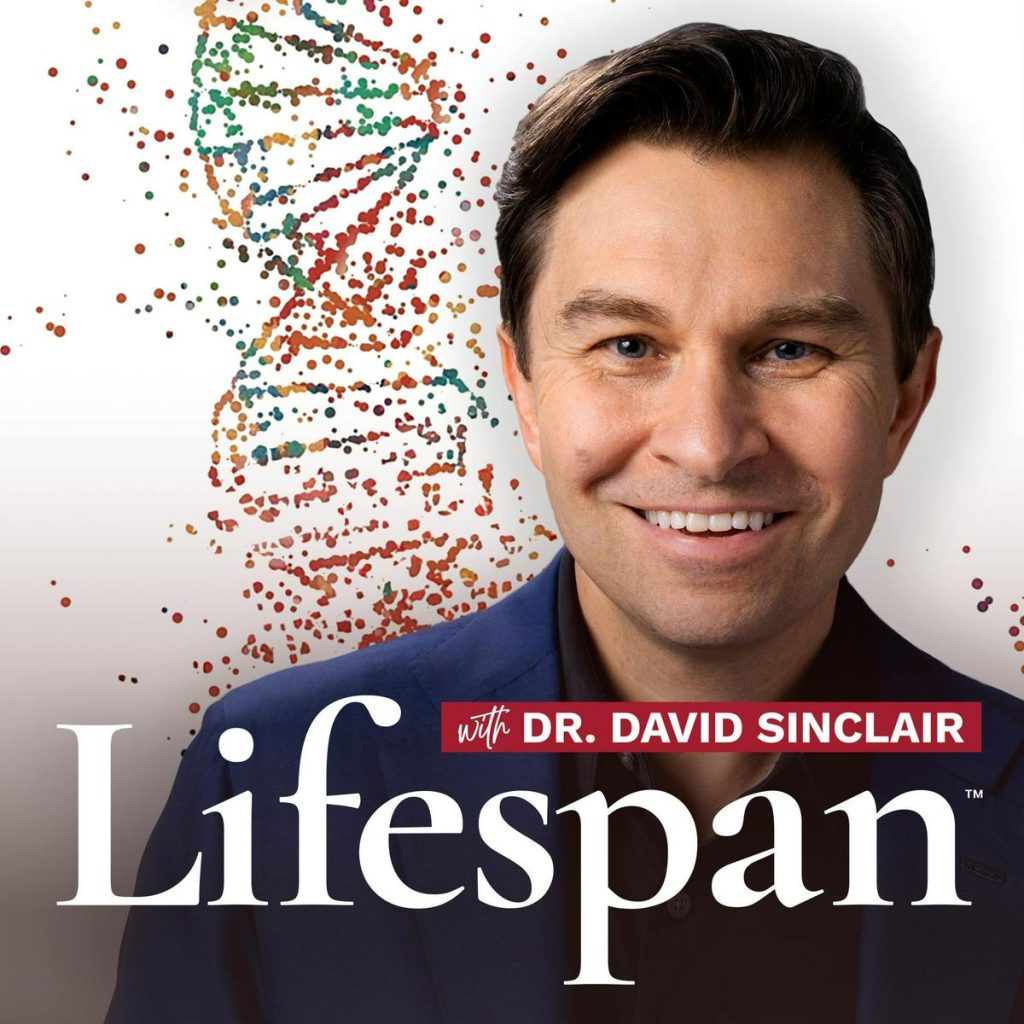
Harvard professor for genetics David Sinclair challenges one of the oldest certainties of human life: What if aging isn’t an inevitable fate, but a biological process we may one day be able to treat?
There are diseases we develop medications for.
There are diseases we develop vaccines against.
There are diseases we can prevent, treat, and sometimes even cure.
And then there is aging.
We accept it.
Not necessarily willingly – but as an inevitable part of life.
David Sinclair believes that is exactly where we may be wrong.
The Harvard Medical School professor of genetics is one of the world’s best-known researchers in the field of aging and longevity. For decades, his work has centered around a question that once might have sounded almost absurd:
Why do we treat the diseases of aging – but not aging itself?
Sinclair goes even further.
His provocative position is:
Aging is a disease – and it can be treated.
What may sound like science fiction touches on one of the most fascinating questions in modern medicine.
Because what if we have considered aging inevitable simply because we didn’t yet understand how it works?
Natural Doesn’t Automatically Mean Unchangeable
Sinclair makes an interesting point.
Throughout history, many diseases and conditions were once considered unavoidable parts of life.
Not necessarily because they truly were unavoidable.
But because medicine didn’t yet understand their causes and had few ways to influence them.
As our knowledge increased, that changed.
We began to understand disease mechanisms.
We identified causes and risk factors.
We developed treatments.
And something people once simply had to accept became something medicine could address.
Why should aging necessarily be different?
Just because almost everyone ages does not automatically mean that the biological processes behind aging can never be influenced.
Sinclair therefore challenges our definition of “normal.”
Aging is normal because it happens to everyone.
But does that make it biologically unchangeable?
That is an entirely different question.
What If Aging Itself Is Behind Many Diseases?
We consider cancer a disease.
Diabetes a disease.
Cardiovascular disease a disease.
Neurodegenerative disorders diseases.
These conditions can be very different from one another.
Yet they have something important in common:
Their risk increases dramatically as we age.
Age is one of the most significant risk factors for numerous chronic diseases.
And that leads to a radical idea:
Perhaps medicine has been focusing too much on the branches – and not enough on the trunk.
We treat one disease.
Then another.
Then another.
Sinclair’s approach raises a much more fundamental question:
What would happen if we could influence the biological processes of aging itself?
Could we potentially delay not just one, but several age-related diseases at the same time?
That would represent an entirely different approach to prevention.
Instead of waiting for the body to become sick, we would attempt to influence the biological processes that make it increasingly vulnerable to disease in the first place.
But Why Do We Age at All?
This is where Sinclair’s research becomes particularly fascinating.
For a long time, aging was primarily viewed as wear and tear.
We live.
Our bodies are exposed to stress.
Damage accumulates.
Eventually, the system becomes less efficient.
Sinclair believes that explanation is incomplete.
His Information Theory of Aging is based on a different idea.
Perhaps one of the greatest problems of aging isn’t simply that our cells become damaged.
Perhaps they increasingly lose their ability to read the right information correctly.
To understand this, we need to take a brief look inside our cells.
Our DNA Isn’t the Whole Story
Our DNA contains the genetic code of our bodies.
But that code alone doesn’t explain how a cell functions.
A muscle cell essentially contains the same DNA as a skin cell.
A liver cell contains the same genetic blueprint as a nerve cell.
Yet they perform completely different jobs.
Why?
Because not every cell uses every gene at the same time.
A cell needs to know:
Which information do I need?
Which genes should be switched on?
Which should remain switched off?
This regulation is controlled in part by what is known as the epigenome.
In simplified terms, you can think of it as a set of instructions that helps a cell interpret and use its DNA.
The DNA contains the information.
The epigenome helps the cell decide which information it needs and when.
And this is where Sinclair believes one of the keys to aging may lie.
What If Our Cells Begin to Forget Who They Are?
Throughout our lives, our bodies must deal with countless forms of damage and stress.
DNA is damaged and repaired.
Cells respond to stress.
Regulatory systems constantly intervene.
Sinclair’s theory proposes that, over time, epigenetic information or organization is increasingly lost or disrupted.
The DNA itself has not necessarily disappeared.
But the cell becomes less capable of reading and using it correctly.
Sinclair has used a remarkably simple analogy:
We are less like machines and more like computers.
According to his theory, aging isn’t simply about broken hardware.
The software increasingly malfunctions.
Programs no longer run as precisely.
Information is accessed at the wrong time or in the wrong place.
Cells gradually lose aspects of their original identity and function.
And that raises an extraordinary question:
What if we could reboot the software?
Do Our Cells Keep a Backup Copy of Youth?
That is precisely one of the questions Sinclair and other researchers have been exploring.
If an old cell isn’t old because all of its original information has been destroyed, but because it can no longer access or interpret that information correctly, perhaps information about its younger state still exists.
In other words:
Maybe an old cell hasn’t completely forgotten how to be young.
And if that is true, it might theoretically be possible to access that information again.
This is where partial epigenetic reprogramming enters the picture.
Researchers are investigating whether certain cellular programs can be altered in a way that allows older cells to regain characteristics associated with a younger state.
And this is where a fascinating theory becomes experimental science.
The Experiment That Challenged Our View of Aging
In 2020, Sinclair’s research group and collaborators published a widely discussed study.
Researchers used three reprogramming factors known as Oct4, Sox2, and Klf4 – often abbreviated as OSK – in mice.
The results were remarkable.
In certain nerve cells, the researchers observed the restoration of more youthful patterns of gene expression and DNA methylation.
Damaged nerve fibers showed improved regenerative capacity.
And in certain mouse models, lost visual function could even be partially restored.
Of course, the mice did not suddenly become young again.
And this does not mean that we can rejuvenate humans today.
But the experiment provided a fascinating clue:
Cells may retain information about a younger state – and certain aspects of aging may potentially be reversible.
This is why Sinclair isn’t only interested in slowing aging.
He believes it may ultimately be possible to reverse certain biological aspects of it.
Suddenly, the Word “Cure” Means Something Different
When we hear the phrase “cure aging,” our minds may immediately jump to eternal youth.
Living to 150.
No wrinkles.
No gray hair.
Immortality.
But that isn’t really the point.
The far more interesting possibility is this:
What if we could postpone the physical decline currently associated with aging for much longer?
What if people could remain strong for longer?
What if their muscles, brain, cardiovascular system, metabolism, and other organs remained functional for longer?
What if diseases commonly associated with aging appeared much later in life?
Then we wouldn’t simply live longer.
We would, above all, stay healthier for longer.
And that is the real essence of longevity.
Not simply adding more years to our lives.
But adding more healthy life to our years.
Sinclair Is Far From Alone
And this is where the story becomes even more interesting.
Sinclair’s theory is only one part of a much broader and rapidly evolving field of research.
Scientists now describe a number of biological Hallmarks of Aging.
These include genomic instability, epigenetic alterations, loss of proteostasis, mitochondrial dysfunction, cellular senescence, chronic inflammation, stem cell exhaustion, and altered communication between cells, among others.
What matters is not simply that researchers can describe these mechanisms.
They are investigating whether and how they can be influenced.
That represents a fundamental shift.
Aging is increasingly becoming a biological problem that can be studied at the molecular and cellular level.
And what we can understand biologically, we may eventually be able to influence therapeutically.
So Should We Simply Wait for the Right Treatment?
No.
Because while scientists are exploring what may become possible tomorrow, there is another important side to longevity research.
The question is:
What can we do today?
We cannot simply reset our epigenetic clock.
We cannot reprogram our cells at home.
And there is currently no approved treatment capable of curing human aging.
But we can influence the conditions in which our bodies age.
Physical activity.
Resistance training.
Adequate sleep.
Metabolic health.
Appropriate nutrition.
Avoiding smoking.
Limiting alcohol.
And importantly:
preserving physical substance and function for as long as possible.
Because even the most fascinating medicine of the future will need one thing:
a body that has been maintained as well as possible until that future arrives.
Longevity Needs Substance
When we talk about aging, we often focus on what we lose.
But another question may be just as important:
What do we need to preserve?
Muscle.
Strength.
Bone structure.
Connective tissue.
Enzyme function.
Regenerative capacity.
Metabolically active tissue.
All of these depend on complex biological processes.
And many of them share a common denominator:
proteins.
Proteins aren’t simply a number on a nutrition label.
They are functional and structural components of the human body.
And proteins themselves are made from amino acids.
The Information May Be Right – But the Building Blocks Still Matter
This brings us back to Sinclair’s fascinating computer analogy.
Our cells need information.
They need to know which programs to run.
But even perfect information isn’t enough.
A blueprint without building materials remains a blueprint.
When our body needs to produce its own proteins, it requires amino acids.
Some amino acids can be produced by the body itself.
Others need to be supplied from outside.
These are known as essential amino acids, or EAAs.
They are indispensable for the body’s own protein synthesis.
This is one reason why adequate protein and amino acid intake becomes particularly relevant as we get older – especially in combination with physical activity and resistance training.
Because longevity isn’t only about minimizing damage.
It is also about:
giving the body the conditions it needs to preserve its substance.
This Is Where Our Approach at Daminoc® Begins
We cannot (yet) cure aging today.
And we would never claim that amino acids can.
The Human Amino Code® takes a much more grounded approach.
It combines ten amino acids in a specifically developed ratio, providing the body with building blocks for its own protein synthesis.
Not as a substitute for good nutrition.
Not as a substitute for exercise.
And certainly not as a miracle cure for aging.
Rather, as part of a broader idea:
If we want to remain capable and active for as long as possible, we shouldn’t only talk about what damages the body. We should also provide what it needs to maintain its structures.
The science of tomorrow may focus on turning back the biological clock.
Today, our focus is on providing the body with building blocks it needs every day.
Both ideas are connected by one fundamental principle:
Don’t simply accept aging – understand what we can influence.
What If David Sinclair Is Right?
Perhaps in a few decades, we will talk about aging very differently.
Perhaps doctors will no longer focus only on blood pressure, cholesterol, or blood sugar.
Perhaps they will directly target biological mechanisms that today fall under the broad umbrella of “aging.”
Perhaps we will regenerate tissues.
Perhaps we will restore epigenetic information.
Perhaps we will actually be able to reverse certain biological aging processes.
Today, we don’t know how far this development will go.
But the fact that respected scientists are seriously investigating these questions in laboratories around the world shows just how profoundly our understanding of aging is changing.
Sinclair’s work leaves us with a remarkably simple idea:
As long as we consider aging inevitable, we will focus primarily on living with its consequences.
The moment we begin to understand aging as a biological problem, we start asking an entirely different question:
What can we do about it?
Maybe aging really is a disease.
Maybe one day we will be able to cure it.
Until then, we have another task: