
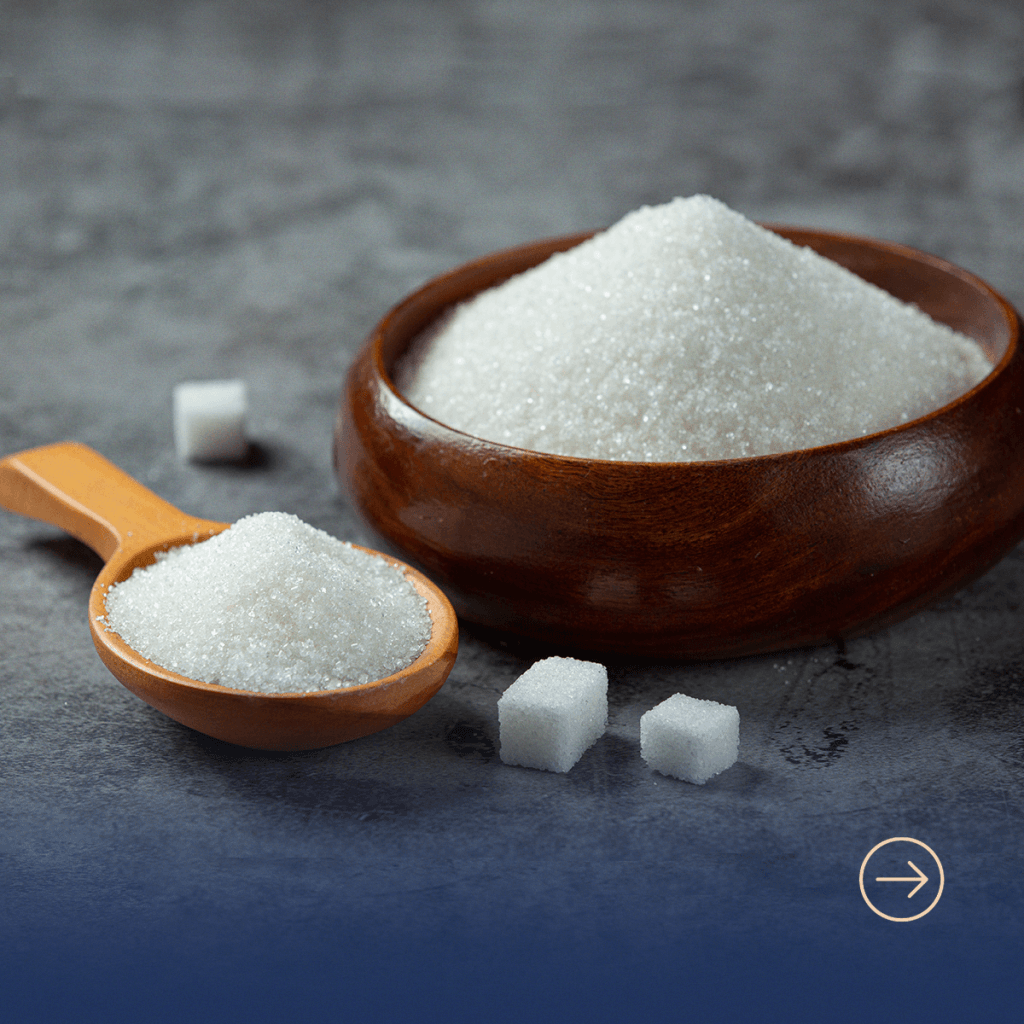
Sugar and body fat: what really connects them
Cutting back on sugar can be a useful step if you want to reduce body fat. Sugary drinks and frequent sweets in particular provide extra energy without contributing many essential nutrients. That does not mean that 90 percent of our body fat comes from sugar. No such general percentage can be derived from the sources reviewed here. What matters is your overall diet, energy expenditure and individual metabolic situation. [1, 2, 5]
To understand sugar and body fat, it helps to separate three things: storing dietary fat, making new fatty acids from carbohydrates, and the ongoing use of stored energy. Insulin influences these processes. But it is not a switch that makes weight loss impossible after every meal. [1, 2, 3]
What body fat stores
Adipose tissue is an active organ and an important energy store. Its fat cells store energy mainly as triglycerides. These consist of a glycerol backbone and three fatty acids. Glycerol is not the same as glucose, or blood sugar. This molecular structure does not tell us what proportion of total body fat originally came from sugar. [1]
Fat cells can take up and store fatty acids from food. The body can also make new fatty acids from carbohydrates. This second route is called de novo lipogenesis. How much it is used depends on the conditions. It does not explain the bulk of all body fat as a general rule. [1, 2]
When sugar can promote fat storage
Carbohydrates are used for energy and stored as glycogen, among other things. When carbohydrate intake rises, the body can burn more carbohydrates and less fat. More dietary fat can therefore remain stored without all the extra sugar first having to be converted into fat. At very high carbohydrate intakes, the production of new fatty acids can also increase substantially. [2]
A more useful everyday question is therefore: which foods make it easy for you to consistently take in more energy than you use? Sugary drinks, sweets and energy-dense snacks can contribute. Dietary fat also provides energy. Neither sugar nor fat can be judged separately from the amount eaten, food choices and overall energy balance. [3, 5]
Insulin and fat loss: not all or nothing
After a meal, insulin supports the uptake and storage of nutrients and slows the release of fatty acids from fat cells. This normal process does not mean that body fat can only be lost when there is no sugar in the blood. What matters is not just fat burning in a single hour, but the balance between storage and use over a longer period. [1, 3]
A controlled study in 19 adults with obesity illustrates this: with the same calorie reduction, participants lost body fat both by eating fewer carbohydrates and by eating less fat. Calculated fat balance was even more favourable with fat restriction, although only carbohydrate restriction substantially lowered daily insulin secretion. The six-day diet periods help explain a mechanism, but do not determine which diet is best for everyone in the long term. [3]
Longer-term evidence also argues against a single necessary type of diet. A Cochrane review of 61 studies involving 6,925 participants found probably little to no difference in weight loss between low-carbohydrate and more balanced weight-reducing diets over up to two years. Low carb can be a good fit, but it is not a requirement for losing weight. [4]
What can help in practice
Start with changes you can keep up: drink sugary beverages less often, portion energy-rich snacks more consciously, and choose meals that fit your routine and nutritional needs. You do not have to cut out all carbohydrates. Reducing sugar is a tool, not a guarantee of fat loss. [4, 5]
Intermittent fasting can be another way to structure energy intake. But it is not a necessary start button for fat burning. An analysis of 99 randomised trials published in 2025 found broadly similar benefits to continuous calorie restriction. A small advantage for alternate-day fasting does not prove that every fasting approach is superior. The trials were mostly short; long-term evidence remains important. [6]
Plan amino acids with a purpose
When changing your diet, protein and essential amino acid intake matter alongside energy intake. Your body needs these building blocks for its proteins. A varied diet is the foundation. Whether supplementation makes sense depends on your actual intake and individual needs. [7]
Daminoc® Human Amino Code provides free amino acids in capsule form. The published composition contains the nine amino acids essential for healthy adults, plus arginine. If you want to supplement amino acids in a targeted way, this format fits easily into your eating plan – a simple way to keep these building blocks on the menu while your diet changes. [7, 8]
The takeaway on sugar and body fat: fewer sugary drinks and a more conscious approach to snacks can be a good start. Lasting change, however, depends on your overall diet and a practical plan, not a blanket 90-percent rule or the claim that fat burning has been completely switched off. [1, 4, 5]
Sources and scientific context
- [1] Richard et al. (2020): Adipose Tissue: Physiology to Metabolic Dysfunction. Endotext. Medical reference chapter on fat storage, the production of new fatty acids, and hormonally regulated fat breakdown.
- [2] Hellerstein (1999): De novo lipogenesis in humans: metabolic and regulatory aspects. Older mechanistic review on converting carbohydrates into fat. Does not give a universally applicable percentage for the origin of all body fat.
- [3] Hall et al. (2015): Calorie for calorie, dietary fat restriction results in more body fat loss than carbohydrate restriction in people with obesity. Controlled crossover study in 19 adults, with six days of calorie reduction per diet. Fat loss calculated from metabolic and fat-balance measurements; no general long-term superiority of one diet.
- [4] Naude et al. (2022): Low-carbohydrate versus balanced-carbohydrate diets for reducing weight and cardiovascular risk. Systematic review of 61 trials involving 6,925 participants; follow-up of up to two years, evidence search through June 2021.
- [5] DGE: Sweet, salty and fatty foods: best left on the shelf. Nutrition guidance on sugary drinks, snacks and energy density.
- [6] BMJ Group (19 June 2025): Intermittent fasting comparable to traditional diets for weight loss. Publisher summary of a systematic review and network meta-analysis of 99 randomised trials involving 6,582 adults. Trials mostly short; no proof that every fasting approach is superior.
- [7] DGE/ÖGE: Selected questions and answers on protein and essential amino acids. Professional-society information on requirements and intake.
- [8] Daminoc: DAMINOC®10 PURE EAA HUMAN AMINO CODE®. Manufacturer page, checked on 17 November 2026. Used for composition and capsule format.