
More protein. More supplements. More energy. More optimization.
Our modern approach to health is often based on the assumption that more must somehow be better.
Italian-American biogerontologist Valter Longo has spent decades exploring a very different idea.
His research addresses a deceptively simple but biologically fascinating question:
What happens to our cells when fewer nutrients are temporarily available?
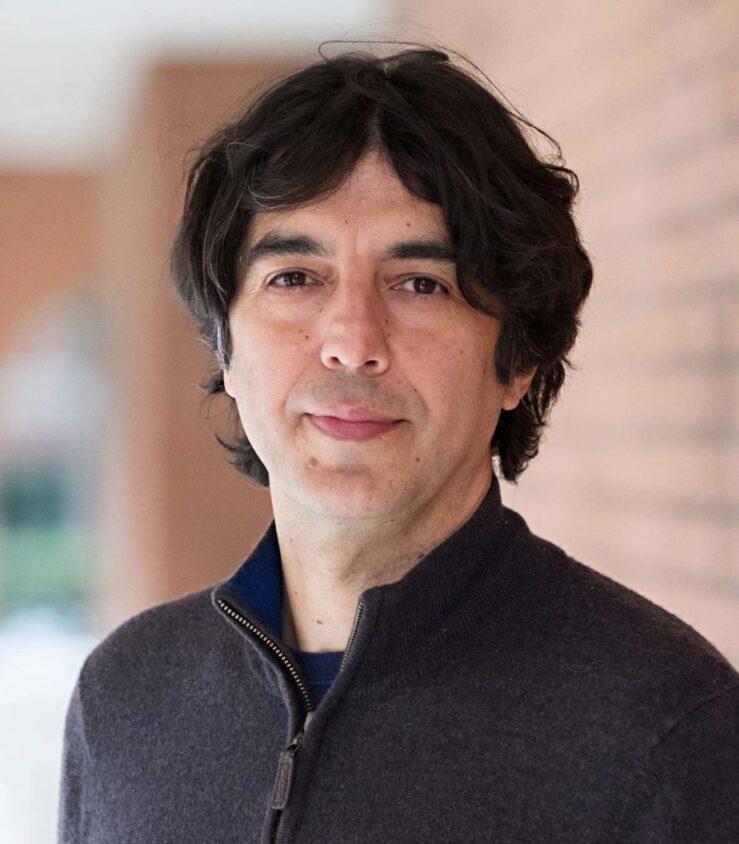
Longo is Professor of Gerontology and Biological Sciences at the University of Southern California and Director of the USC Longevity Institute. His research focuses on aging, nutrient-sensing pathways, fasting and age-related diseases.
His work has made him one of the best-known figures in modern longevity research.
And it leads to an insight that, at first glance, may seem almost paradoxical:
For a longer, healthier life, it may not only matter what we eat – but also when we give our bodies less, and when we provide them with sufficient building blocks.
Our bodies have highly sophisticated systems for detecting whether energy and nutrients are readily available.
When nutrients are abundant, pathways involved in growth, protein synthesis and cell proliferation are activated.
When nutrient availability decreases, the metabolic environment changes.
Among the signaling pathways extensively studied in this context are IGF-1 and mTOR.
For many years, Longo’s research has explored whether the continuous activation of growth signals may also have disadvantages over the long term.
The basic concept can be simplified like this:
There are times for:
Growth and rebuilding.
And there are times when:
Maintenance, stress resistance and repair become more prominent.
Finding the right balance between these states is one of the central questions in longevity research.
A major review by Longo and Rozalyn Anderson therefore examines nutrition not simply in terms of calories, but also food composition, the duration and frequency of fasting periods, and their effects on conserved nutrient-sensing and metabolic pathways.
Longo is particularly well known for developing and researching the concept of the Fasting-Mimicking Diet – FMD.
This does not mean fasting continuously.
Instead, energy intake and nutrient composition are altered for a limited period in an attempt to trigger some of the physiological responses associated with fasting while still consuming defined amounts of food.
A 2024 analysis published in Nature Communications evaluated data from two clinical trials involving cycles of the Fasting-Mimicking Diet in humans.
After three FMD cycles, researchers observed changes in insulin resistance and other prediabetes-related markers, as well as liver fat. Using a validated measure of biological age, FMD was also associated with a median reduction of approximately 2.5 years – independent of weight loss.
That is an intriguing result.
But it does not mean that three fasting cycles literally make a person two and a half years younger.
What changed was a biological-age measure.
The findings therefore should not be interpreted as proof that FMD extends human lifespan.
That distinction matters.
This is where Longo’s research becomes particularly interesting in the context of our ongoing discussion about protein.
Protein is, of course, essential for life.
Without amino acids, our bodies cannot synthesize new proteins of their own.
But certain amino acids do more than simply provide building material.
They can also function as biological signals, influencing nutrient-sensing and growth pathways.
And that changes the question.
It is no longer simply:
We also need to ask:
And this is where current research becomes particularly fascinating.
A widely discussed 2014 study from Longo’s research group investigated associations between protein intake and mortality using observational data.
Among people aged 50 to 65, high protein intake was associated in this analysis with higher overall and cancer mortality. The associations were substantially reduced or disappeared when the protein was plant-derived.
But among people over the age of 65, the picture looked different.
In this age group, higher protein intake was associated with lower overall and cancer mortality.
This is an important point.
Because it illustrates that:
As we age, our biological circumstances change.
Muscle mass becomes easier to lose.
The muscle response to protein and amino acids can become less pronounced.
The risk of sarcopenia and frailty increases.
Longo’s own dietary recommendations therefore allow for somewhat higher protein intake after the age of 65 to help preserve muscle mass.
Longevity does not simply mean eating as little protein as possible.
And this is where the story becomes particularly interesting.
In June 2026, Longo’s team, together with researchers including scientists from Harvard and the University of Toronto, published a new study in Cell Metabolism.
The researchers were not simply asking which diet might affect lifespan.
They addressed a much more practical question:
The researchers studied several dietary patterns in older mice.
A predominantly plant-based, lower-protein “Longevity Diet”, inspired by Mediterranean and traditional Okinawan dietary patterns, was supplemented with a moderate amount of the essential amino acid methionine.
The results were intriguing.
The animals showed lower fat mass and frailty as well as improvements in cardiometabolic markers. Changes were also observed in pathways involving IGF-1, growth hormone, GLP-1 and FGF21.
But the remarkable part of this study is not that everyone should now start supplementing methionine.
That would be the wrong conclusion.
The central dietary experiment was conducted in mice, and the findings cannot be translated into a supplementation recommendation or dosage for humans.
The more interesting message is this:
A related commentary by researchers from the U.S. National Institute on Aging highlights a similar idea: protein quality, rather than quantity alone, may be relevant to metabolic health and aging.
That represents an important shift in perspective.
For decades, we have tended to think about protein primarily in grams.
20 grams.
50 grams.
100 grams per day.
But proteins consist of different amino acids.
And our bodies do not respond to the abstract number “30 grams of protein”.
Protein is digested and amino acids become available to the body.
These amino acids can then perform different functions.
They serve as building blocks for our own proteins.
Some are precursors for other molecules.
And some also act as metabolic signals.
So the increasingly interesting questions are not simply:
How much protein?
But:
Which protein? Which amino acids? In what ratio? At what time? And for whom?
Recent scientific reviews of protein and amino acid restriction in aging similarly emphasize the importance of individual amino acids – including methionine, isoleucine and valine – in nutrient sensing and metabolism, while also acknowledging the potential trade-off between restriction and the preservation of muscle and physical function in later life.
This brings us to a point that is often lost in discussions about longevity.
On one side, we have research into:
Fasting, protein restriction and reduced growth signaling.
On the other, we know how important protein and essential amino acids become for maintaining muscle mass and other body structures, particularly as we grow older.
Is that a contradiction?
Not necessarily.
Our bodies are not permanently in the same biological state.
Healthy aging may instead involve respecting different needs at different times:
And:
That is a far more nuanced picture than:
“More protein is good.”
or:
“Less protein makes us live longer.”
Both statements are too simplistic.
Longo’s work challenges an assumption that has shaped much of modern nutrition:
More is not automatically better.
But neither is less.
Age, physical activity, health status, protein source, amino acid profile and metabolic context all matter.
And as we grow older, we face a particular challenge:
On the one hand, we want to support metabolic processes associated with healthy aging.
At the same time, we cannot afford to lose sight of muscle mass, strength and physical function.
Because simply living longer is not enough.
That is precisely why frailty is such an important endpoint in Longo’s latest research.
Daminoc® does not promote a fasting protocol, nor is it intended to replace Longo’s Longevity Diet.
Our question is different:
The human body builds its own proteins according to its biological requirements.
We cannot instruct it to use amino acids for muscle today, collagen tomorrow and enzymes the day after.
What we can influence is the availability of the building blocks required for these processes.
That is why at Daminoc®, we do not look only at the total quantity of protein.
We also focus on the composition of essential amino acids.
And this brings us back to an interesting connection with Longo’s latest research:
The amino acids behind that number deserve at least as much attention.
Perhaps one of the most important lessons emerging from modern longevity research is this:
Our bodies do not always need the same thing.
They need periods of rebuilding.
Periods of recovery.
Movement.
Nutrients.
And possibly also periods during which nutrient and growth signaling is reduced.
Valter Longo’s research demonstrates just how complex the relationship between nutrition and aging really is.
And recent work takes that discussion another step further:
It isn’t only about how much we eat.
It is also about what we make available to our bodies – and when.
And in some contexts, even the composition of individual amino acids may make a meaningful difference.
Transparency note: Valter Longo has disclosed an equity interest in L-Nutra, a company developing medical foods, as well as patent and licensing interests related to the Fasting-Mimicking Diet. These relationships are disclosed in the relevant scientific publications and should be considered when interpreting the research.