
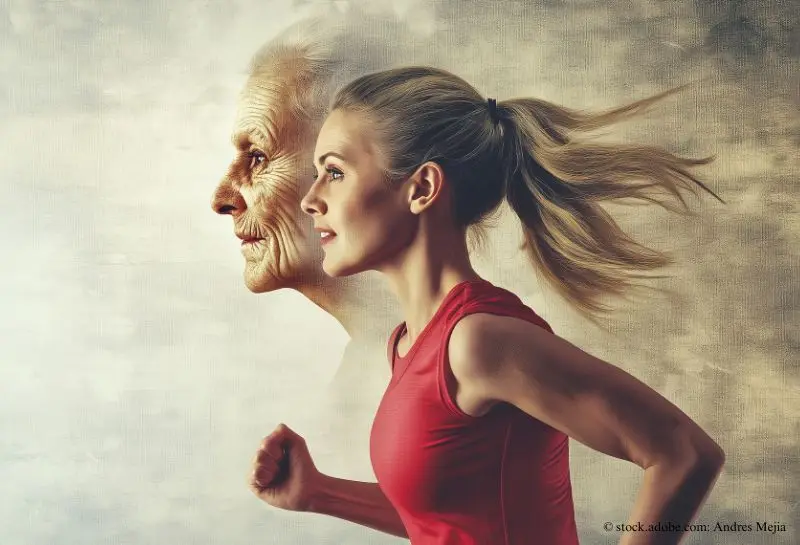
How We Can Age Healthier
We all get older.
Every day, every hour, every minute.
But does getting older automatically mean becoming weaker? Losing muscle? Becoming less resilient? Recovering more slowly and having to accept increasing physical limitations?
We’ve become accustomed to this picture of aging.
Perhaps too accustomed.
Because there is an important difference between our chronological age – the number of years we have lived – and the actual condition and functional capacity of our body.
Two people can both be 70 years old and yet be in remarkably different physical condition.
One may be active, strong, mobile, and mentally sharp.
The other may already have lost considerable muscle strength and mobility and increasingly depend on assistance in everyday life.
Their age is the same.
Their physical condition is not.
And that is exactly why it is worth taking a closer look.
Aging Is Inevitable – Accelerated Decline Is Not
Of course, our bodies change as we get older.
Hormone levels change. Recovery may become slower. Maintaining muscle and bone mass can become more difficult. Metabolic processes change, and some repair mechanisms may become less efficient.
That is part of biological aging.
But the speed and extent of these changes are by no means the same for everyone.
Our lifestyle plays a significant role.
Physical inactivity, smoking, chronic sleep deprivation, excessive alcohol consumption, poor nutrition, chronic overeating, and inadequate intake of essential nutrients can contribute to processes that accelerate the loss of physical function.
Conversely, regular physical activity – particularly resistance training – sufficient sleep, a balanced diet, and an adequate supply of essential nutrients can help preserve physical function for longer.
We cannot stop aging.
But we can influence how we age.
Treating Symptoms – Without Forgetting the Causes
Imagine water dripping from your kitchen ceiling.
You place a bucket underneath it.
For the moment, the problem on the floor is solved.
But the cause isn’t.
Perhaps a pipe is leaking. Maybe water is coming through the roof. Until someone finds out where the water is coming from, the bucket won’t solve the actual problem.
The same principle can be useful when thinking about our health.
Alongside treating symptoms, it is worth asking:
Why is the body losing function in the first place?
Medication and medical treatment can be essential and save lives every day. It would be wrong to position necessary medical treatment against lifestyle measures.
But prevention often begins much earlier.
Before disease develops.
Before significant muscle strength is lost.
Before mobility becomes restricted.
Before recovery becomes increasingly difficult.
So perhaps the more important question is:
What does our body need to maintain and renew its structures for as long as possible?
Your Body Is Never a Finished Structure
We tend to think of our body as something relatively permanent.
In reality, it is constantly being rebuilt.
Proteins are broken down and rebuilt. Cells are replaced. Skin renews itself. Muscle tissue responds to physical stress. Bone is continuously remodeled. Enzymes and numerous signaling molecules are constantly being produced.
The body you started reading this article with is not a static structure.
It is working.
Repairing.
Replacing.
Rebuilding.
Every single day.
And to do that, it needs energy, information – and building blocks.
Protein Alone Doesn’t Build the Body
Protein is one of the most important sources of building material in our diet.
But our body cannot simply take the protein from an egg, a piece of fish, legumes, or a protein shake and place it directly into a muscle.
Proteins first have to be broken down into their individual components:
Amino acids.
Only then are these amino acids available for the synthesis of the body’s own proteins.
Some amino acids can be produced by the body itself.
Others must be supplied through our diet. These are known as essential amino acids.
And their availability becomes particularly interesting as we get older.
Why Amino Acids Become Increasingly Important With Age
As we age, our muscles often respond less strongly to a given amount of protein or amino acids than they did when we were younger.
Scientists refer to this as anabolic resistance.
Put simply:
The body may require a stronger or more targeted stimulus to sufficiently stimulate muscle protein synthesis.
At the same time, many people become less physically active as they get older and may also consume less protein.
This can reinforce an unfavorable cycle:
Less movement means less stimulus for the muscles.
Less muscle stimulation can contribute to muscle loss.
Less muscle mass can then make movement more difficult.
And this can create a downward spiral that affects far more than visible muscle.
Because muscle isn’t just about strength.
It supports mobility and balance, plays an important role in energy and glucose metabolism, and serves as a valuable physical reserve.
Maintaining muscle mass is therefore an important part of healthy aging.
It’s Not Simply About Eating More Protein
This is where a common misunderstanding arises.
If protein is important, then more protein must automatically be better.
It isn’t quite that simple.
What matters is which amino acids actually become available after digestion and whether the essential amino acids required for protein synthesis are present in sufficient amounts.
If one necessary building block is missing, a construction process cannot simply continue indefinitely.
Think of building a house.
A thousand additional bricks are of little use if the next stage of construction requires steel beams.
That’s why the question shouldn’t only be:
“How much protein am I eating?”
But also:
“Which amino acids are actually available to my body?”
Healthy Aging Begins Long Before Old Age
When we talk about longevity, many people immediately think of new compounds, sophisticated diagnostics, or futuristic anti-aging treatments.
Yet some of the most powerful foundations of healthy aging are surprisingly simple.
Regular physical activity.
Resistance training.
Adequate sleep.
A balanced diet.
Not smoking.
Limiting alcohol.
Maintaining a healthy body weight.
Social connection.
And ensuring an adequate supply of essential nutrients.
None of these will make us immortal.
But together, they can influence how well our bodies maintain their function over the years.
The true goal of longevity should therefore not simply be to add as many years as possible to our lives.
It should be:
to add as much life as possible to those years.
Bringing Nutrition and Regeneration Together
This is also where the Daminoc® approach begins.
Not with the promise of stopping the aging process.
But with a much more fundamental question:
Which building blocks does the human body need for its daily processes of maintenance, renewal, and repair?
Daminoc® EAA Complex provides essential amino acids in a specifically developed amino acid profile. It supplies amino acids that the body cannot produce on its own and that are required for normal protein synthesis.
With Daminoc® 10 EAA COLLAGEN PRO +, this approach is expanded further. In addition to the Human Amino Code®, the formula contains collagen peptides, glycine, creatine, and vitamin C, among other ingredients.
This provides a combination of building blocks and nutrients that are particularly relevant in the context of muscle and connective tissue. Vitamin C contributes to normal collagen formation for the normal function of skin, bones, and cartilage. Creatine increases physical performance in successive bursts of short-term, high-intensity exercise when consumed at 3 g per day.
None of this replaces exercise or a balanced diet.
Quite the opposite.
Nutrition provides the building blocks. Exercise provides the stimulus. Recovery gives the body time to respond.
It is the combination that matters.
Perhaps the Most Important Question About Aging
We cannot turn back the years.
Nor should we regard aging itself as a disease.
But we can stop automatically dismissing every loss of strength, resilience, and physical performance with the words:
“That’s just what happens when you get older.”
Perhaps we should ask different questions instead.
Am I moving enough?
Am I challenging my muscles?
Am I getting enough sleep and recovery?
How well am I nourishing my body?
And does my body have the building blocks it needs?
Because your body never simply stops building.
It continues to rebuild.
To renew.
To repair.
Throughout your entire life.
The question is: What conditions are we giving it to do so?