
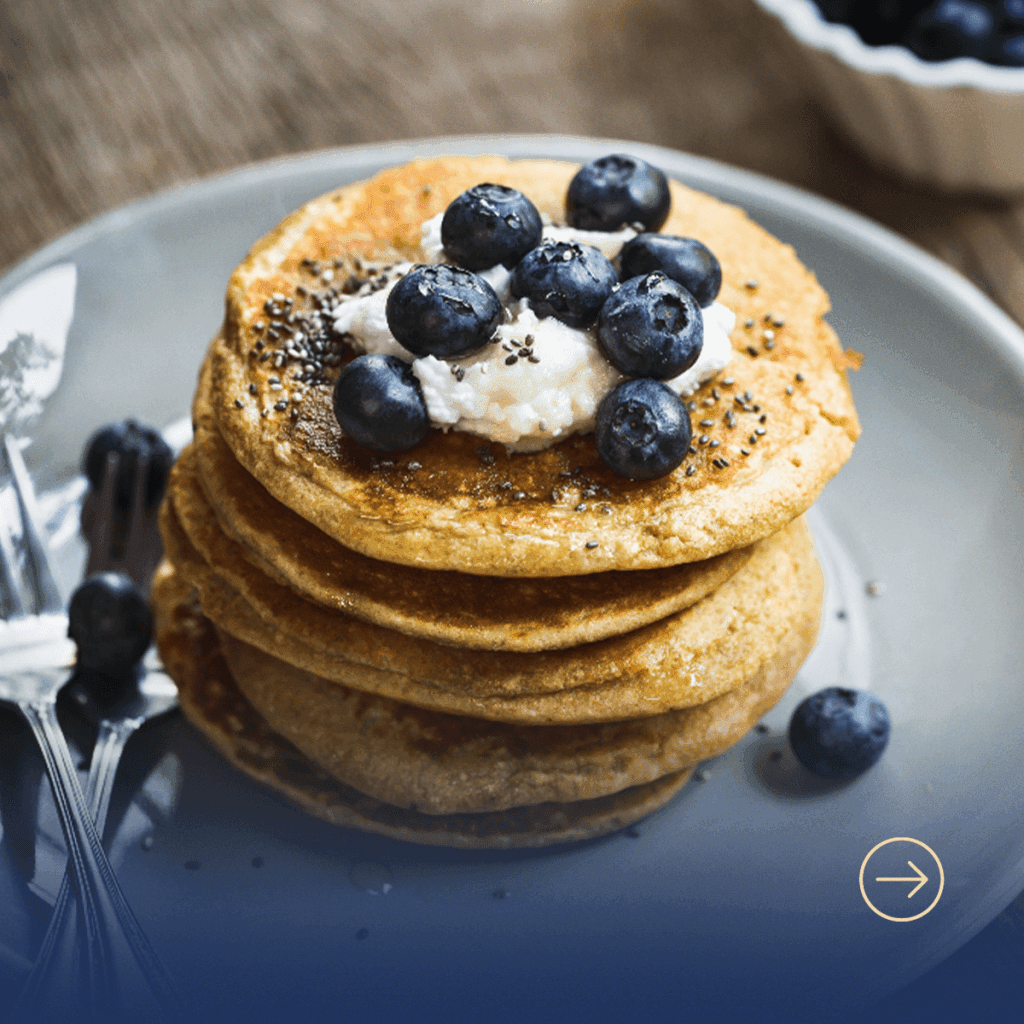
Protein-rich breakfast recipes add variety to the table: warm from the oven, chilled in a bowl or savory with eggs and pulses. There is no need to promise a perfect breakfast. What matters is a clear protein source, a suitable portion and food you enjoy. Here are seven ideas with quantities and preparation tips.
What makes protein-rich breakfast recipes useful?
Protein provides amino acids for building and maintaining body tissues. Some are essential and must come from the diet. Dairy products, eggs and pulses are good protein sources; grains, nuts and seeds contribute too. Different foods can be combined, including in an entirely plant-based diet. [1, 2]
Protein-rich breakfast recipes are part of the overall diet, not an independent guarantee of muscle growth or weight loss. The right amount depends on factors such as age, activity and the other meals you eat. For packaged ingredients, check protein per portion, not only per 100 g. Plant-based drinks and yogurt alternatives can vary considerably.
The following quantities are starting points for the portions listed. Texture and cooking time also depend on the product, dish and cooker. Adjust liquid gradually and check that baked foods and egg dishes are fully cooked. Protein powder must be suitable for the intended use; follow its label.
Sweet protein-rich breakfast recipes
1. Baked oats with blueberries
For one portion: 45 g rolled oats, ½ banana, 15 g baking-suitable protein powder, ½ tsp baking powder, 120 ml milk and 50 g fresh blueberries. A little rapeseed oil for greasing.
Method: Preheat the oven to 190 °C conventional heat. Wash the blueberries. Blend the other ingredients, fold in the berries and transfer to a small greased ovenproof dish. Bake for about 20–25 minutes, until cooked through in the middle. Allow to cool briefly. A different protein powder may need a little more or less milk.
Milk and protein powder provide some of the protein here. If using frozen berries, heat them thoroughly beforehand and follow the package instructions rather than relying on a fixed baking time. Germany’s Federal Institute for Risk Assessment, BfR, recommends a core temperature of at least 90 °C for frozen berries. [1, 3]
2. Small banana and quark pancakes
For two portions, about twelve small pancakes: 2 ripe bananas, 100 g finely ground oats, 2 eggs, 100 g low-fat quark, about 100 ml milk, 1 tsp baking powder, 2 tsp rapeseed oil for the pan and 150 g fresh mixed berries.
Method: Mash the bananas and mix with the eggs, quark and milk. Stir in the oats and baking powder and leave briefly to thicken. The batter should be thick but pourable; add milk gradually if needed. Cook small pancakes on both sides in a lightly oiled non-stick pan over medium heat. Browning the outside is not enough: the center must be fully cooked too. USDA guidance gives at least 71 °C internally for egg dishes. Wash the berries and serve alongside. [4]
Quark and eggs make the protein source clear. These protein-rich breakfast recipes need neither food guilt nor a promise of being automatically healthier than every other breakfast option.
3. Raspberry, chia and quark pot
For one portion: 150 g low-fat quark, 100 ml milk, 15 g chia seeds, 1 tsp peanut butter, optionally ½ tsp maple syrup, 50 g fresh raspberries and 10 g cashews.
Method: Mix the quark, milk, peanut butter and optional maple syrup until smooth. Stir in the chia seeds, stir again after a few minutes, then cover and refrigerate for at least two hours or overnight to soak. If too thick, add a little milk. Gently wash the raspberries and add them with the cashews just before eating. Follow the instructions on the chia seed package.
Quark is the main protein base, with milk, seeds and nuts contributing too. This does not justify a blanket low-carb or weight-loss claim. Store chilled and use an insulated cool bag when taking it out. [1, 2, 4]
4. Berry smoothie bowl
For two small portions: a total of 300 g frozen blueberries and raspberries, 200 g low-fat quark, 20 g protein powder suitable for cold dishes, about 75–125 ml milk and optionally 1 tsp honey. A little banana or chopped nuts for topping.
Method: First heat the frozen berries thoroughly according to their package instructions; BfR recommends at least 90 °C at the core. Stir so that all berries become hot. Cool promptly in a shallow, clean container, then chill in the refrigerator. Only then blend with the quark, protein powder and a little milk to begin with. Add liquid until spoonable and divide between two bowls. [3, 4]
This keeps protein-rich breakfast recipes with berries practical without treating frozen fruit as automatically ready to eat. Enjoy freshly prepared and do not leave unrefrigerated for long periods.
5. Quinoa and banana porridge with quark
For one portion: 40 g quinoa, 150 ml milk, about 100 ml water, 1 small banana, 100 g low-fat quark and optionally cinnamon or 10 g chopped nuts.
Method: Rinse the quinoa thoroughly in a fine sieve. Bring to the boil with the milk and water, then simmer gently for about 15–20 minutes, stirring regularly, until tender. The package instructions take priority. Add liquid if needed to prevent sticking. Slice the banana and add it towards the end. Remove from the heat, cool slightly and stir in the quark. Serve with cinnamon or nuts. [5, 6]
Quinoa offers a change from oats, but is not a reason to call every portion an athlete’s breakfast. Quark and milk complement the plant protein here. [1, 5]
Savory protein-rich breakfast recipes
6. Omelet with cottage cheese
For one portion: 2 eggs, 100 g cottage cheese, 2 cherry tomatoes, ½ small pepper, a little spring onion, herbs, salt, pepper and 1 tsp rapeseed oil.
Method: Wash and chop the vegetables and herbs. Beat and season the eggs. Heat the oil in a non-stick pan, add the eggs and cook over medium heat until fully set. Cover or turn carefully if needed. Do not rely on one minute per side; thickness and heat affect the cooking time. Egg dishes should reach at least 71 °C internally. Then fill with the cottage cheese and vegetables, fold and serve immediately. [4]
Eggs and cottage cheese provide protein. The exact amount depends on the products used and the size of the eggs. [1]
7. Breakfast bowl with chickpeas
For two small portions: 150 g cottage cheese, 150 g already cooked and drained chickpeas from a can or jar, ½ avocado, 15 g pumpkin seeds, 45 g grapes, 1 tsp olive oil, 1 tsp sesame seeds, herbs and a little paprika.
Method: Rinse the chickpeas and drain well. Warm them in the oil for a few minutes, then add the herbs and paprika. Wash and halve the grapes and slice the avocado. Divide the cottage cheese between two bowls and arrange the chickpeas, avocado, grapes, pumpkin seeds and sesame on top. This means cooked chickpeas, not dried ones that have only been soaked. [2]
Protein-rich breakfast recipes with pulses can combine animal and plant sources. For a plant-based version, use a protein-rich soy product according to its label; avocado alone does not replace the protein base. [1, 2]
Preparing ahead, chilling and adding a supplement
Use clean hands, utensils and containers. Refrigerate perishable breakfasts containing quark, milk or eggs promptly and keep them cold in transit. USDA guidance allows no more than two hours unrefrigerated, or one hour when the surrounding temperature exceeds about 32 °C. These are safety limits, not target times. Also check allergens and follow the instructions on the products you use. [4]
Depending on their ingredients, protein-rich breakfast recipes provide energy, fiber and other nutrients alongside protein. According to the manufacturer, Daminoc Human Amino Code® supplements all nine essential amino acids. This can be a practical contribution to amino acid intake when supplementation fits the diet. It does not replace a complete breakfast. The recipes still call for the listed foods and suitable protein powders; Daminoc is not intended as a gram-for-gram swap here. [1, 7]
Whether pancakes, porridge or a bowl, choose protein-rich breakfast recipes to suit your taste, needs and daily routine. The overall diet matters more than a single breakfast.
Sources
[1] DGE: Protein, functions and food sources.
[2] DGE: Pulses, nuts and food combinations.
[3] BfR (2023): Heat frozen berries thoroughly before eating.
[4] USDA: Food hygiene, chilling and internal temperatures.
[5] BZfE (2024): Quinoa and other pseudocereals.
[6] REWE Deine Küche (2026): Rinsing and cooking quinoa, practical cooking guidance.
[7] Daminoc: Human Amino Code® and composition according to the manufacturer.