
Protein-rich snacks can help supplement your protein intake in everyday life: at home, at work or after training. You do not always need a specialist bar. Quark, yogurt, eggs and pulses offer plenty of options. What matters is what the actual portion provides and how it fits your overall diet. Here are sweet and savory ideas, with tips for preparation and transport. [1]
When are protein-rich snacks useful?
Protein provides amino acids for building and maintaining body tissues. Some are essential and must come from the diet. Good sources include dairy products, eggs and pulses. Grains and nuts contribute too. A varied selection can combine plant and animal sources or be entirely plant-based. [1, 2]
Protein-rich snacks are an addition, not a requirement between every meal. The right amount depends on factors including age, activity and the rest of the diet. The German Nutrition Society, DGE, gives 0.8 g of protein per kilogram of normal body weight per day for healthy adults aged 19 to under 65; from 65, its estimated value is 1.0 g/kg. Intense training or illness may require a different assessment. One snack alone does not build muscle or automatically cause weight loss. [1, 3]
For packaged ingredients, check protein per portion, not only per 100 g. A few nuts or some nutritional yeast do not automatically make a dish particularly high in protein. Products, texture and baking times may vary. Check that food is cooked through and adjust the liquid to suit the ingredients you use.
Sweet ideas for protein-rich snacks
1. Banana bread with oats
For one small loaf tin, about ten slices: 3 ripe bananas, 100 ml milk, 120 g rolled oats, 50 g baking-suitable protein powder, 8 g baking powder, 8 g vanilla sugar, a little cinnamon and 30 ml rapeseed oil. Chopped nuts or berries are optional.
Method: Preheat the oven to 180 °C conventional heat and grease the tin. Mash the bananas and mix with the milk and oil. Add the dry ingredients and stir together. Add a little liquid if necessary. Transfer to the tin and bake for around 45–55 minutes. The time is a guide: the bread must be baked through in the middle too. Cool and slice. Do not taste the raw batter. [4]
Milk and protein powder provide some of the protein; the amount in one slice depends on the product and slice size. Protein-rich snacks such as this bread should therefore not be judged by their name alone.
2. Chocolate-chip quark cream instead of raw cookie dough
For two small portions: 250 g low-fat quark or skyr, 20 g almond butter, 20 g chocolate chips, a little vanilla and a splash of milk if needed.
Method: Stir the quark, almond butter and vanilla until smooth. Add just enough milk to reach the texture you want. Fold in the chocolate chips and serve chilled. For a plant-based version, choose a soy product with a suitable protein content according to its label.
The cream contains no raw flour or raw eggs. This matters for unbaked snacks: flour can contain pathogens and is not automatically ready to eat. [4]
3. Chilled oat and peanut bars
For about eight small bars: 100 g rolled oats explicitly suitable for eating without cooking, 60 g protein powder suitable for cold dishes, 45 g peanut butter, around 100 ml milk or plant drink, 60 g chopped dried fruit and a little cinnamon.
Method: Mix the dry ingredients. Stir in the peanut butter and liquid, adding the liquid gradually. Press firmly into a small lined container and chill for at least 30 minutes. If it does not become firm enough to slice, serve a small portion in a jar. Store chilled and pack with an ice pack when taking it out. These are not shelf-stable pantry bars. [5]
Savory protein-rich snacks
4. Crispy chickpeas
For two small portions: 250 g already cooked, drained chickpeas from a can or jar, 1 tbsp olive oil, paprika, a little garlic powder, salt and pepper.
Method: Rinse the chickpeas, drain well and pat dry. Toss with oil, spread on a baking tray and roast at 180 °C fan for about 30 minutes. Turn occasionally. Add the spices and bake for another 5–10 minutes if needed, without burning them. Enjoy freshly made; refrigerate for longer storage, even though this may reduce crispness.
This means cooked chickpeas, not dried ones that have only been soaked. Pulses can contain lectins, and soaking does not replace the necessary cooking. Protein-rich snacks made with pulses also provide fiber. [2, 6]
5. Savory popcorn on the side
For two small bowls: 3 cups of already popped, unsweetened popcorn, 2 tbsp ready-to-eat nutritional yeast and a little salt. Mix and season to taste.
Popcorn remains primarily a grain-based snack. A little nutritional yeast does not make it a reliable main protein source. To put together protein-rich snacks, serve it with a portion of quark dip or a suitable soy dip, for example.
6. Avocado and quark dip
For two portions: 1 avocado, 150 g low-fat quark, 4 cherry tomatoes, 25 g dried tomatoes, a little lemon juice and garlic to taste.
Method: Wash the vegetables, halve the avocado and scoop out the flesh. Finely chop the tomatoes. Combine with the quark, lemon juice and garlic, then season. Serve with vegetable sticks or whole-grain crackers. Store chilled. Here, quark provides most of the added protein; avocado does not replace a protein source. [1, 5]
Protein-rich snacks on the go
7. Takeaway yogurt smoothie
For one portion: 150 g skyr or a protein-rich soy product according to its label, ½ pear, 1 small banana, 2 tbsp ready-to-eat rolled oats, a little cinnamon and water as needed.
Method: Wash and chop the fruit. Blend all the ingredients until creamy and pour into a clean, tightly closing bottle. Refrigerate and transport in a cool bag. Protein-rich snacks still need to fit the portion size and individual needs. [1, 5]
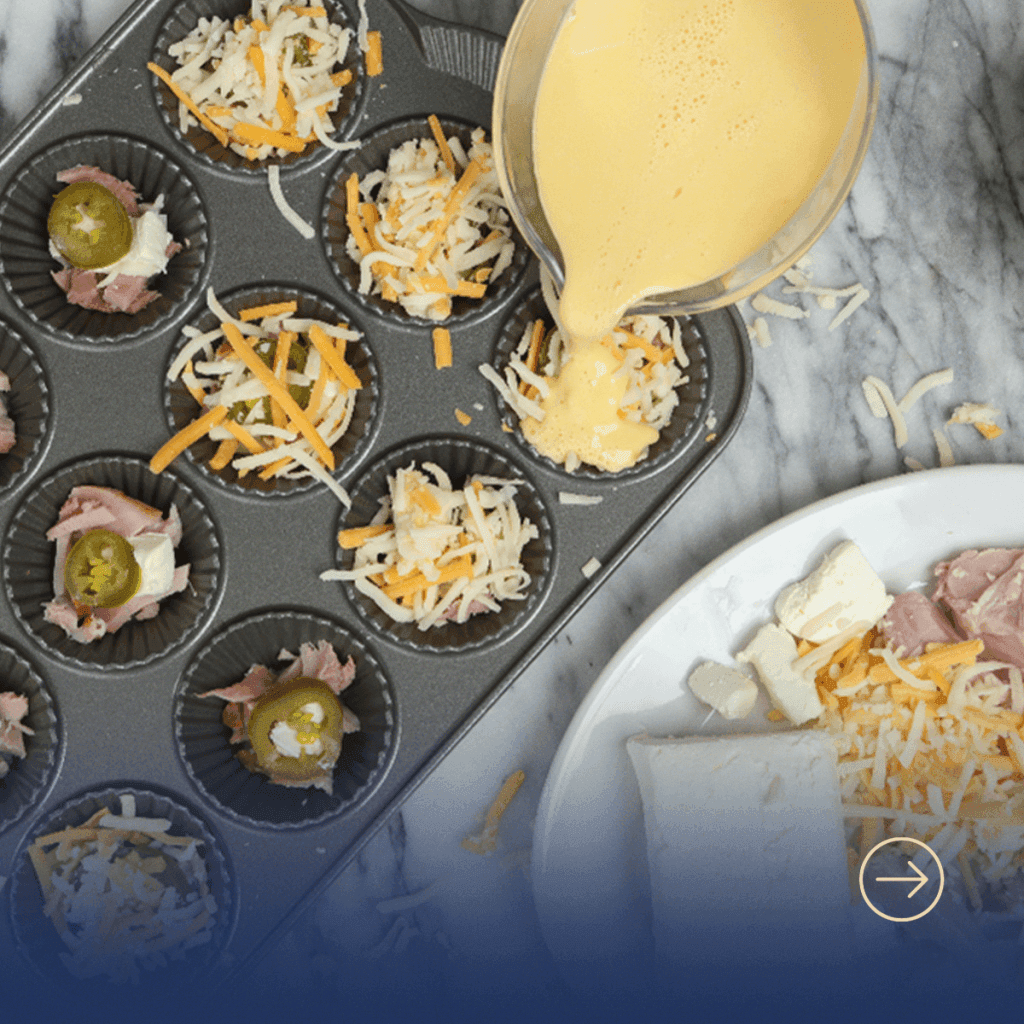
8. Egg bites from a muffin tin
For twelve pieces: 12 eggs, 50 g grated cheese, 12 slices of ready-to-eat turkey ham if desired, spring onions and seasoning. The amount of egg must suit the size of the muffin cups.
Method: Preheat the oven to 180 °C conventional heat. Lightly grease the tin, optionally line with ham and distribute the cheese. Beat and season the eggs, then pour in without overfilling the cups. Bake for about 15–20 minutes, until fully set in the center too. For egg dishes, a safe internal temperature is at least 71 °C. Add washed, sliced spring onions. [5]
Cool promptly, refrigerate in small portions and use an ice pack for transport. These protein-rich snacks are easy to portion, but are not intended to sit unrefrigerated for hours. [5]
When you need something quick
Low-fat quark with fruit, a fully cooked egg, plain yogurt with nuts or a pulse-based dip with whole-grain bread are simple options. Nuts provide plenty of energy as well as protein, so portion size matters. Compare the labels of plant-based yogurt alternatives, as their protein content can vary considerably. [1, 2]
Chilling rule: Refrigerate perishable snacks containing dairy or eggs promptly and keep them cold during transport. USDA guidance allows no more than two hours unrefrigerated, or one hour when the surrounding temperature exceeds about 32 °C. These are safety limits, not target times. Also check allergens such as milk, egg, soy, peanuts and tree nuts, and follow the instructions on the products you use. [5]
Where does Daminoc fit in?
Protein-rich snacks can provide energy, protein and other nutrients depending on their ingredients. According to the manufacturer, Daminoc Human Amino Code® supplements all nine essential amino acids. This can be a practical contribution to amino acid intake when supplementation fits the diet. It is not a replacement for a meal and its fiber, fats, vitamins or minerals. [1, 7]
The free amino acids are also not automatically a suitable replacement for baking protein powder in these recipes. Do not simply swap in Daminoc gram for gram without an appropriate recipe. The overall diet and individual needs remain what matters, not eating as many protein-rich snacks as possible. [7]
Conclusion
Protein-rich snacks can be made with simple ingredients. Choose a clear protein source, a suitable portion and safe chilling when needed. Sweet or savory is a matter of taste; one snack does not need to be perfect or promise muscle gain or weight loss. Daminoc can supplement essential amino acid intake, while foods provide the wider nutritional context. [1, 5, 7]
Sources
[1] DGE: Protein, functions and age-specific reference values.
[2] DGE: Pulses, nuts and food combinations.
[3] Jäger et al. (2017): ISSN position stand on protein and exercise.
[4] FDA: Handling flour and raw dough safely.
[5] USDA: Food hygiene, chilling and safe internal temperatures.
[6] BfR (2024): Lectins in pulses and adequate cooking.
[7] Daminoc: Human Amino Code® and composition according to the manufacturer.